
Explore our toolkit
Seven tools, and the research behind each one
Every part of Steady is there because the research on training managers for hard conversations keeps pointing at it. Here is what each tool does, why it helps, and the studies it stands on, labelled by how strong they are.

- Tool 01The baseline flightA first reading, blind spots included.
- Tool 02The flight pathFive phases, every conversation.
- Tool 03The coursesTwelve short courses, each with a checkride.
- Tool 04The RoomA real voice that answers and holds its ground.
- Tool 05The weekly rhythmOne topic a week, two runs, your days.
- Tool 06Your planSix weeks, your seat, your field.
- Tool 07ProgressWhat moved since your baseline.



Tool 01 · The baseline flight
Know where you actually stand
In the app
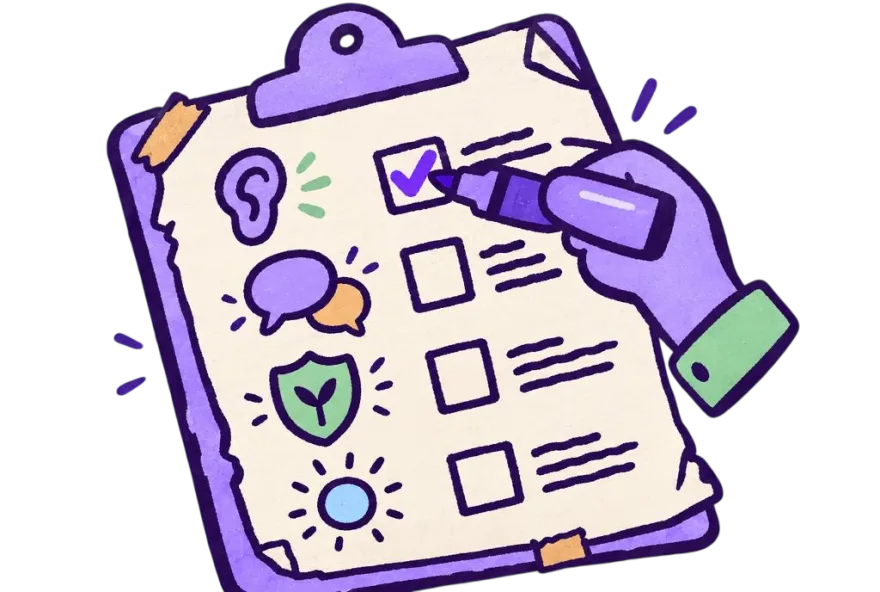
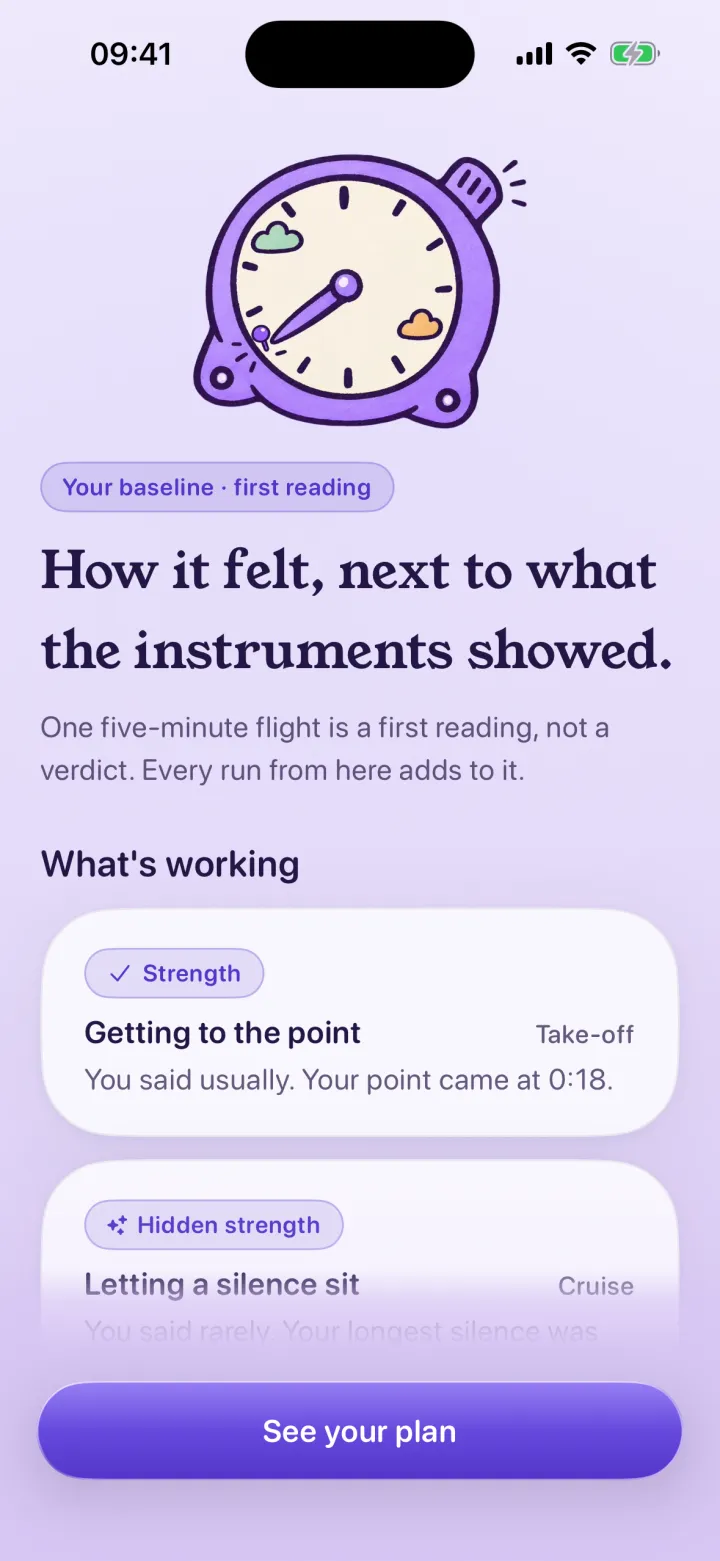
Eight questions about how these conversations really feel, then five minutes in a room picked for the seat you are in. The read-out puts what you said about yourself next to what the run showed: what is working, what you might not be seeing, and where to start.
Why it helps
How you think a conversation went is only loosely related to how it went. Most of us rate ourselves on a feeling, and the feeling is shaped by how nervous we were, not by what we said.
So Steady asks about specific behaviours rather than confidence, then checks the answers against a real run. The gap between the two is where your plan starts.
What the research says
Self-ratings of ability match actual performance only moderately, and match better when the question is about something specific.
Zell & Krizan (2014), “Do people have insight into their abilities? A metasynthesis”Perspectives on Psychological ScienceMeta-analysis
People's views of their own skill are often poorly related to how they actually perform, at school, in health and at work.
Dunning, Heath & Suls (2004), “Flawed self-assessment: implications for health, education, and the workplace”Psychological Science in the Public Interest 5, 69–106Review
Leadership training works better when it starts from a needs analysis: finding out what this person actually needs before deciding what to train.
Lacerenza, Reyes, Marlow, Joseph & Salas (2017), “Leadership training design, delivery, and implementation”Journal of Applied Psychology 102, 1686–1718Meta-analysis
Read more: You are the least reliable witness to your own conversations ›
Tool 02 · The flight path
A structure you can lean on under pressure
In the app
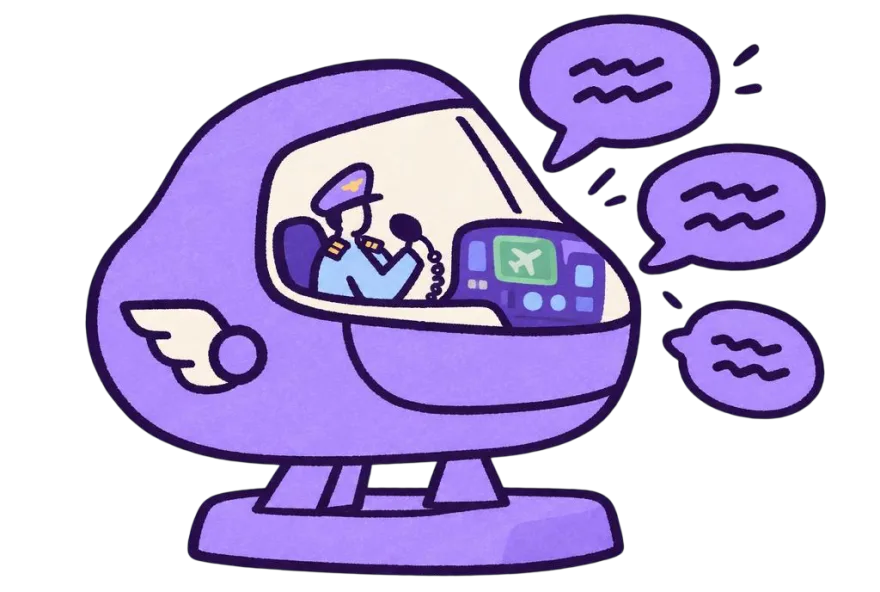
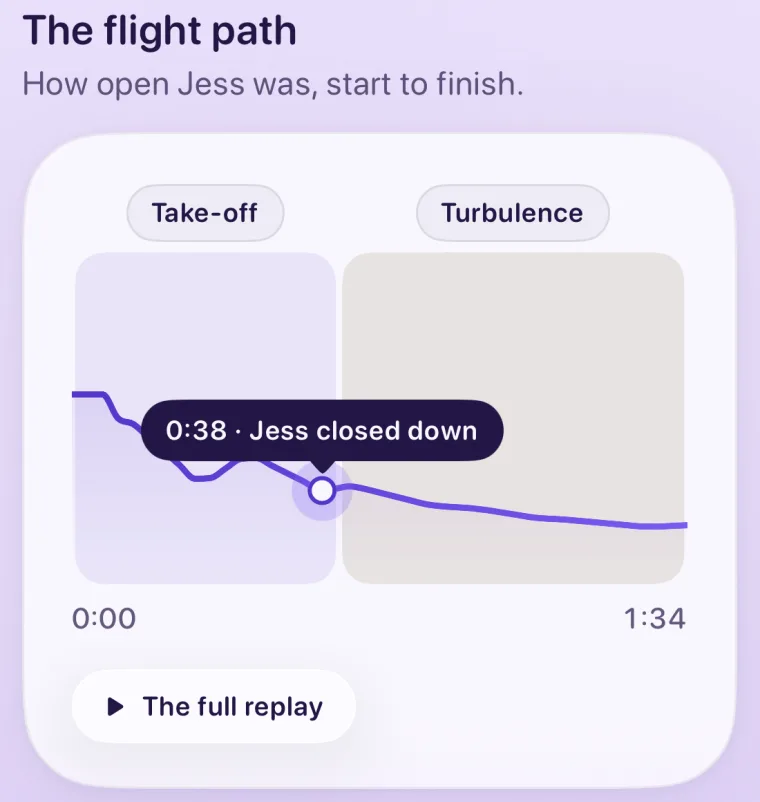
Pre-flight, take-off, cruise, turbulence, landing. Every run is read against the five phases and marked in words, never a score. The Flight Log shows where the other person opened up or closed down, and what you had just said when they did.
Why it helps
Under pressure, people forget the plan and fall back on habit. A short structure gives you somewhere to stand: say why you are there, then listen, stay kind when it gets hot, and agree what happens next.
No single conversation model has been shown to beat the others. What the research does back is the behaviour inside each phase: feedback about the task rather than the person, listening that lowers defensiveness, and closing with belief in the person.
What the research says
Feedback improved performance on average, but more than a third of feedback made performance worse. Feedback aimed at the person rather than the task was more likely to backfire.
Kluger & DeNisi (1996), “The effects of feedback interventions on performance”Psychological Bulletin 119, 254–284Meta-analysis
Useful feedback answers three questions: where am I going, how am I doing, and what next. (Education research.)
Hattie & Timperley (2007), “The power of feedback”Review of Educational Research 77, 81–112Review
Being listened to well made speakers less anxious and less defensive, and more open about their own views.
Itzchakov, Kluger & Castro (2017), “I am aware of my inconsistencies but can tolerate them”Personality and Social Psychology BulletinStudy
Putting a feeling into words calmed the brain's response to upsetting images. A lab study; that it helps mid-conversation is our inference, not a finding.
Lieberman et al. (2007), “Putting feelings into words”Psychological Science 18, 421–428Study
Critical feedback that came with high standards and belief in the person got more people to act on it. (School students' essays.)
Yeager et al. (2014), “Breaking the cycle of mistrust: wise interventions to provide critical feedback across the racial divide”Journal of Experimental Psychology: General 143, 804–824Study
Both warmth (consideration) and clear direction (structure) relate to how effective leaders are seen to be.
Judge, Piccolo & Ilies (2004), “The forgotten ones? The validity of consideration and initiating structure in leadership research”Journal of Applied Psychology 89, 36–51Meta-analysis
Read more: Five phases, and the two where it usually goes wrong ›
Tool 03 · The courses
Make it safe to be honest
In the app
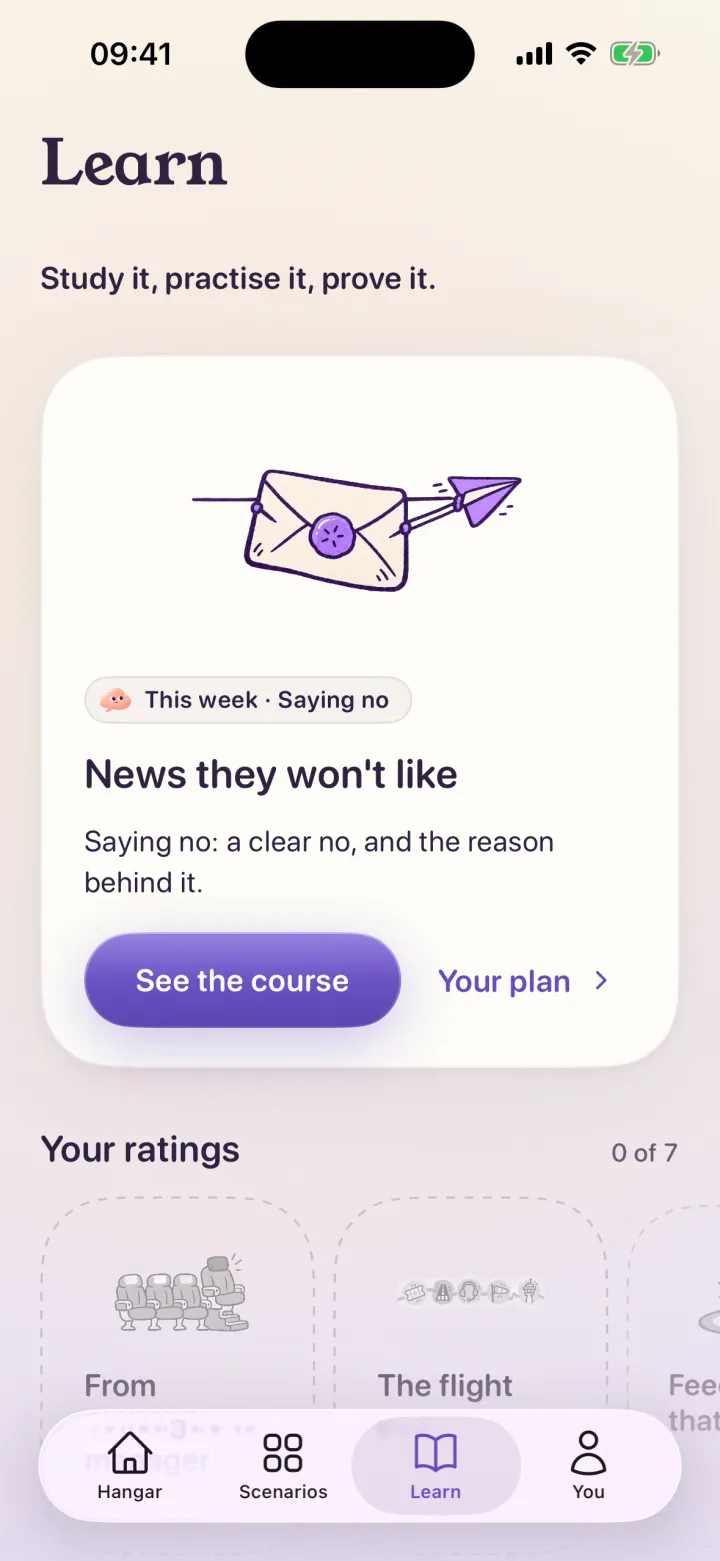
Twelve short courses in the Learn tab, one of them about exactly this: invite their view, stay calm when challenged, separate the problem from the person. Each one is some reading, some practice in a room, and a checkride to prove it.
Why it helps
No structure survives a conversation the other person does not feel safe in. If speaking up has cost people before, they will agree with you in the room and disagree in the corridor.
That safety is set by how the manager behaves, which means it can be practised. The courses pair a short read with a room where you try it.
What the research says
Teams that felt safe to take interpersonal risks did more learning behaviour (asking for help, admitting mistakes, seeking feedback), and learning behaviour went with better team performance.
Amy Edmondson (1999), “Psychological safety and learning behavior in work teams”Administrative Science Quarterly 44, 350–383Study
Across many studies, psychological safety was linked to better task performance, more learning and more engagement, and supportive leadership was one of the things that built it.
Frazier, Fainshmidt, Klinger, Pezeshkan & Vracheva (2017), “Psychological safety: a meta-analytic review and extension”Personnel Psychology 70, 113–165Meta-analysis
High-quality listening reduced speakers' social anxiety and made them more willing to reflect on their own position.
Itzchakov, Kluger & Castro (2017), “I am aware of my inconsistencies but can tolerate them”Personality and Social Psychology BulletinStudy
Read more: Why nobody tells you the thing you most need to hear ›
Tool 04 · The Room
Say it out loud, to someone who pushes back
In the app
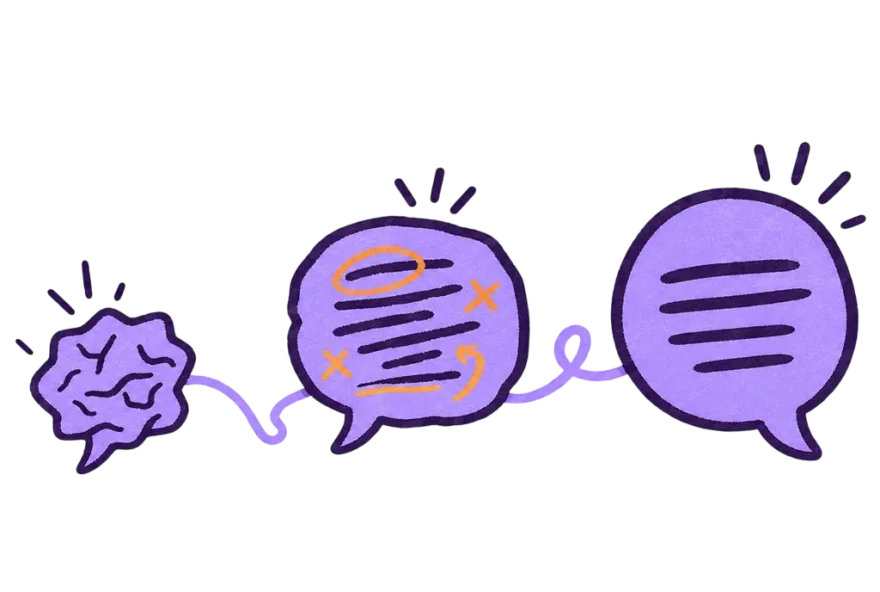
You speak. The other person answers in a real voice, in the moment, and holds their position. Their state is drawn above them and moves while you talk, so you can see how a sentence is taken while you are still saying it. Every room can be typed instead, at any point.
Why it helps
Going over it in your head feels like preparation, but nobody in your head interrupts, cries, or says “that's not fair.” The part that is hard is the moment the other person does something you did not plan for.
Practising against someone who reacts is how pilots, surgeons and negotiators train for the moments that matter. It works best when you practise situations you actually face and see what your words did.

What the research says
People who practised a conflict with an AI partner then used cooperative strategies twice as often, and escalating ones 67% less, in a live conflict afterwards. One study, 40 people.
Shaikh, Chai, Hedlin, Bernstein & Yang (2024), “Rehearsal: simulating conflict to teach conflict resolution”CHI ’24Study
Skills practice transfers to the job best when people work on scenarios they bring themselves, see bad examples as well as good ones, and set goals. The effect on skills held or grew over time.
Taylor, Russ-Eft & Chan (2005), “A meta-analytic review of behavior modeling training”Journal of Applied Psychology 90, 692–709Meta-analysis
Simulation training was consistently linked with large gains in knowledge, skills and behaviour compared with no training. (Doctors, nurses and other health professionals.)
Cook et al. (2011), “Technology-enhanced simulation for health professions education: a systematic review and meta-analysis”JAMA 306, 978–988Meta-analysis
Managers trained to deliver bad news fairly handled simulated dismissal meetings better, and the people told saw them as fairer.
Richter, König, Koppermann & Schilling (2016), “Displaying fairness while delivering bad news”Journal of Applied Psychology 101, 779–792Study
Read more: Rehearsing it in your head is not practice ›
Tool 05 · The weekly rhythm
Keep it sharp, not a one-off
In the app
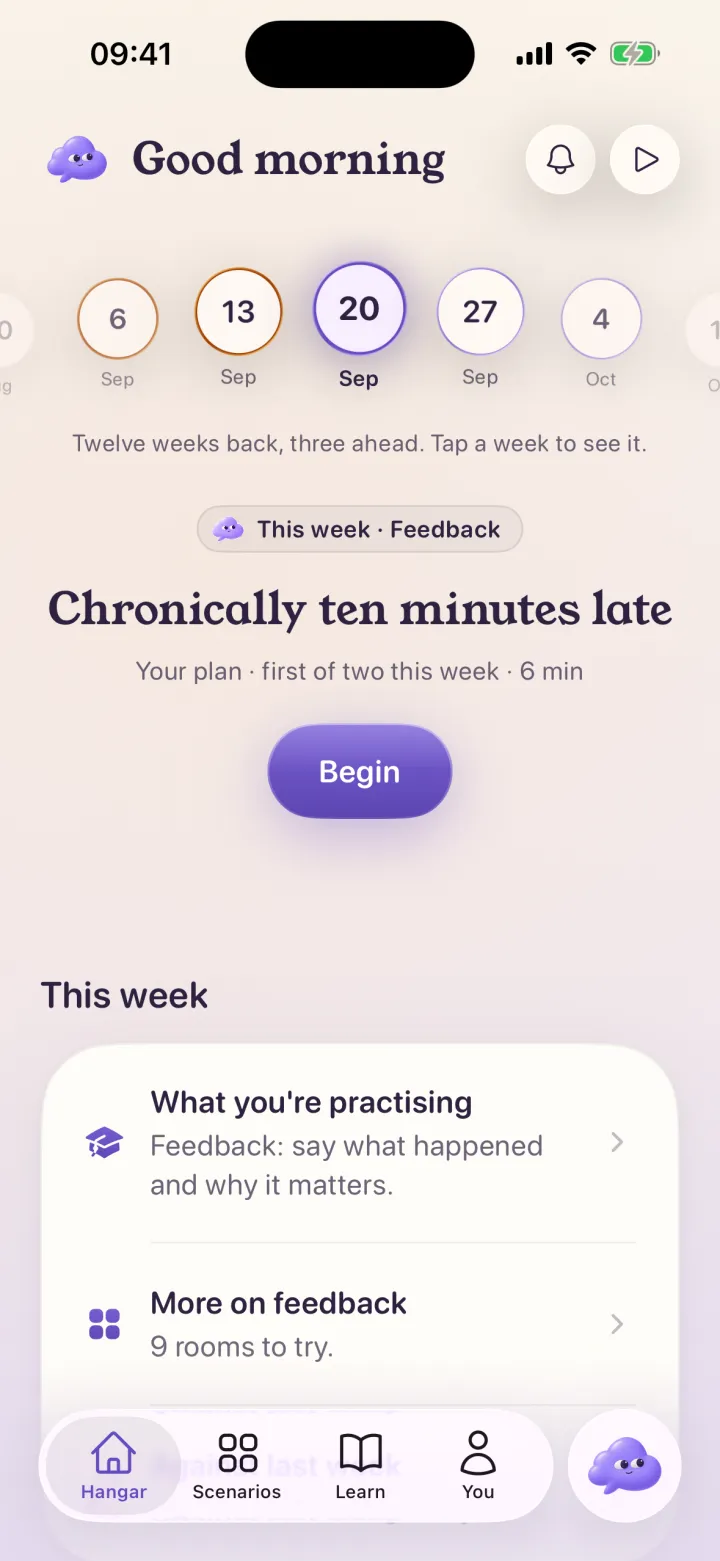
Steady works a week at a time: one topic a week (feedback, boundaries or saying no) and two runs on it, on whichever days suit you. Re-checks come round when a phase is due one, and a proficiency check every six weeks. When a real conversation is coming up, it prepares that one with you, then asks how it went.
Why it helps
A one-day workshop feels useful and fades within weeks, because skills you do not use decay. Two short runs a week keeps it in use without taking over your week.
Spacing practice out beats cramming it, for almost anything people learn. And deciding in advance what you will say when a real moment comes makes you far more likely to do it.
What the research says
Skills fade with non-use, and thinking skills fade faster than physical ones.
Arthur, Bennett, Stanush & McNelly (1998), “Factors that influence skill decay and retention”Human Performance 11, 57–101Meta-analysis
Spreading practice out over time led to better long-term memory than the same practice done in one go. (Hundreds of experiments on verbal learning.)
Cepeda, Pashler, Vul, Wixted & Rohrer (2006), “Distributed practice in verbal recall tasks: a review and quantitative synthesis”Psychological Bulletin 132, 354–380Meta-analysis
Leadership training was more effective when it was spread over several sessions rather than delivered all at once.
Lacerenza, Reyes, Marlow, Joseph & Salas (2017), “Leadership training design, delivery, and implementation”Journal of Applied Psychology 102, 1686–1718Meta-analysis
Deciding in advance exactly when and how you will act (“if they say X, I will say Y”) had a medium-to-large effect on actually doing it.
Gollwitzer & Sheeran (2006), “Implementation intentions and goal achievement: a meta-analysis of effects and processes”Advances in Experimental Social Psychology 38, 69–119Meta-analysis
Read more: Rehearsing it in your head is not practice ›
Tool 06 · Your plan
Built for the seat you are in
In the app
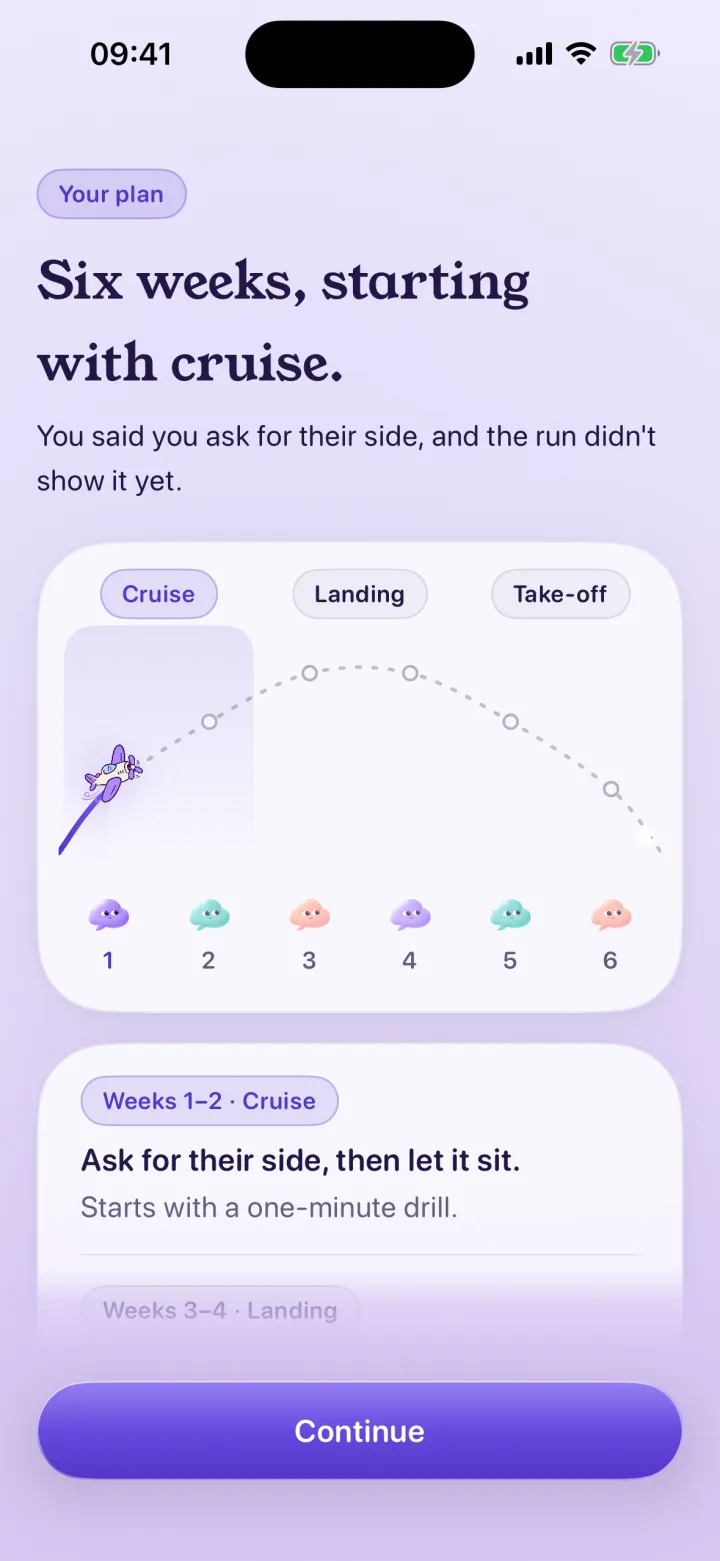
Your plan is six weeks, built from your baseline and the conversations your seat finds riskiest. The one you have been avoiding comes first, and you can swap a week's topic when something else is more pressing. Tell Steady where you lead (retail, healthcare, schools, hospitality and eight more) and every room is written for that workplace.
Why it helps
A first-time manager on her first performance problem needs different practice from a director on her fourth restructure. Generic training spends most of its time on things you do not need.
The research says the same: start from what this person needs, practise on situations they will actually face, and set a specific goal for each stretch.
What the research says
Leadership training works better when it is built from a needs analysis rather than delivered the same to everyone.
Lacerenza, Reyes, Marlow, Joseph & Salas (2017), “Leadership training design, delivery, and implementation”Journal of Applied Psychology 102, 1686–1718Meta-analysis
Practice transferred to the job best when people worked on scenarios drawn from their own situations.
Taylor, Russ-Eft & Chan (2005), “A meta-analytic review of behavior modeling training”Journal of Applied Psychology 90, 692–709Meta-analysis
Specific, stretching goals led to better performance than being told to “do your best”.
Locke & Latham (2002), “Building a practically useful theory of goal setting and task motivation”American Psychologist 57, 705–717Review
82% of people who move into management in the UK have had no formal management training.
Chartered Management Institute with YouGov (2023), “Taking responsibility: why UK plc needs better managers”4,500+ workers and managers surveyedVendor survey
New managers describe the move as a change of identity, not of tasks, and learn most of it on the job.
Linda A. Hill, “Becoming the boss”Harvard Business ReviewPractitioner
Read more: Managing the people who were your peers last month ›
Tool 07 · Progress
See what actually changed
In the app
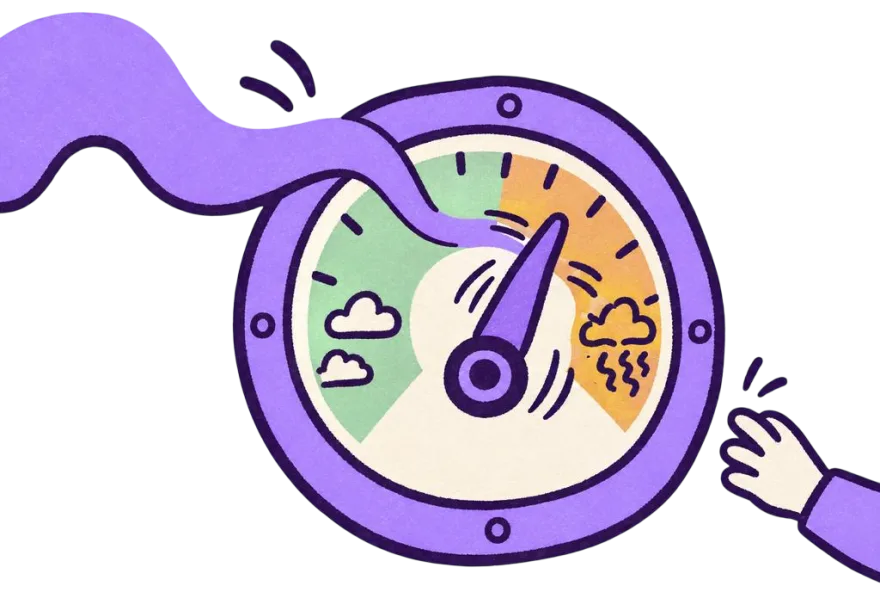
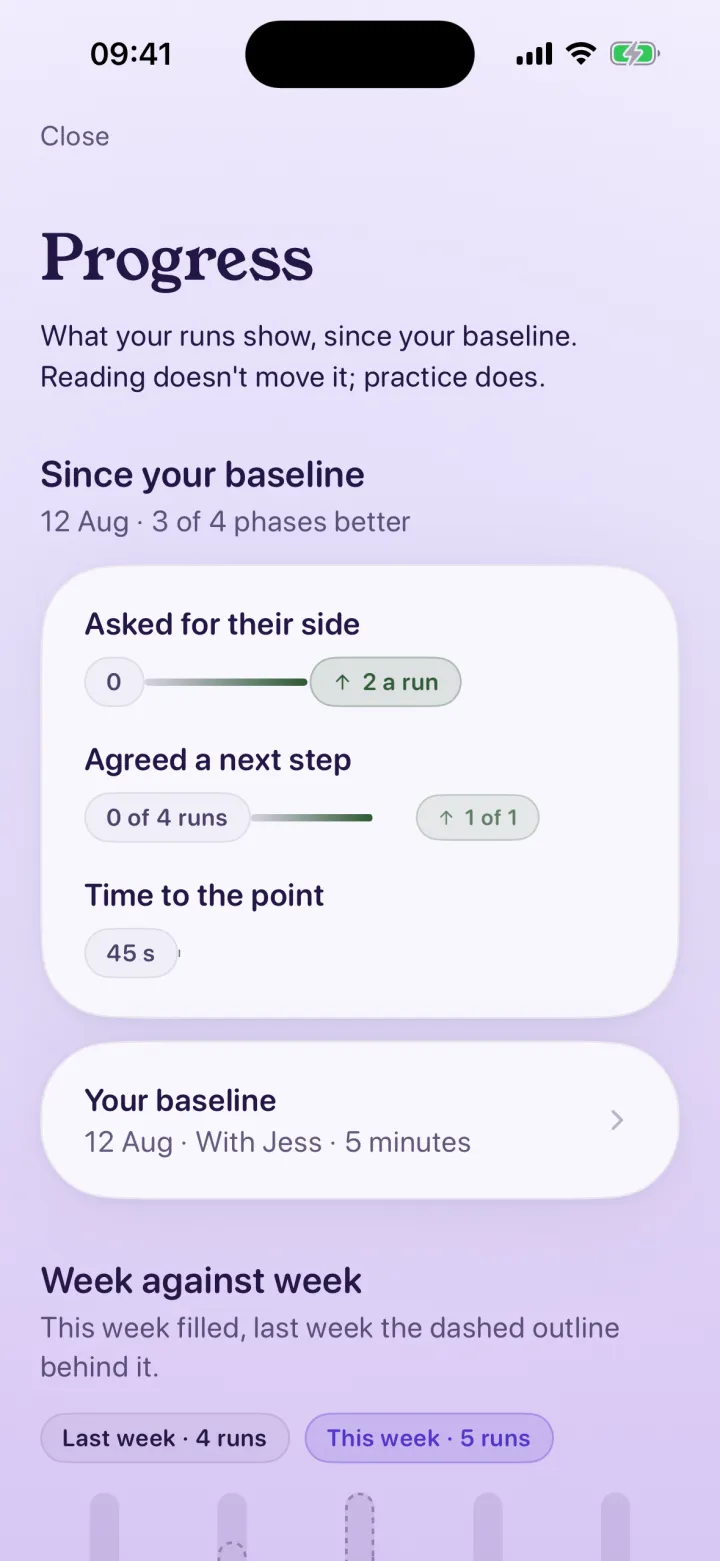
Not attendance, and not a completion rate. Progress is worked from your runs: how long you take to get to the point, how often you hedge, how long you can sit inside a silence, and which blind spots have closed since your baseline.
Why it helps
“I think I'm getting better” is the same unreliable witness as before. Counting a few concrete things, run after run, shows you whether anything moved.
Watching your own progress is not just a report card. Monitoring it is one of the things that makes change happen.
What the research says
Prompting people to monitor their progress towards a goal helped them reach it, and the effect was bigger when progress was written down.
Harkin et al. (2016), “Does monitoring goal progress promote goal attainment? A meta-analysis of the experimental evidence”Psychological Bulletin 142, 198–229Meta-analysis
Feedback helps most when it is about the task and how to do it, rather than about the person.
Kluger & DeNisi (1996), “The effects of feedback interventions on performance”Psychological Bulletin 119, 254–284Meta-analysis
In negotiations, people who held a longer silence reached better outcomes for both sides.
Curhan, Overbeck, Cho, Zhang & Yang, “Silence is golden: extended silence, deliberative mindset, and value creation in negotiation”Journal of Applied Psychology, written up by MIT SloanStudy
Because self-ratings are a weak guide, progress is better measured from what you did than from how it felt.
Zell & Krizan (2014), “Do people have insight into their abilities? A metasynthesis”Perspectives on Psychological ScienceMeta-analysis
Read more: Four things worth counting in your next hard conversation ›
What the evidence doesn’t say
Where we stop short
- Self-administered is weaker. The largest meta-analysis of leadership training finds training on your own less effective than training with a person. Steady leans on what the same research says helps: a baseline, practice, feedback, and sessions spaced out rather than stacked up.
- No framework has been shown to beat the others. The flight path follows the spine most models share. We claim the behaviour in each phase is backed; we do not claim the model is.
- Some findings come from other people. Students, health professionals, lab volunteers. Each finding above says who, where it matters, and a study is labelled a study, not a proof.
- It is practice, not advice. Nothing here is HR, legal or clinical advice, and Steady is not therapy or crisis support.
Every source on this page
23 sources, labelled by what kind of evidence each one is, so you can weigh them yourself. A practitioner model is someone’s working method, not a finding.
Zell & Krizan (2014), “Do people have insight into their abilities? A metasynthesis”Perspectives on Psychological Science
Meta-analysis
Dunning, Heath & Suls (2004), “Flawed self-assessment: implications for health, education, and the workplace”Psychological Science in the Public Interest 5, 69–106
Review
Lacerenza, Reyes, Marlow, Joseph & Salas (2017), “Leadership training design, delivery, and implementation”Journal of Applied Psychology 102, 1686–1718
Meta-analysis
Kluger & DeNisi (1996), “The effects of feedback interventions on performance”Psychological Bulletin 119, 254–284
Meta-analysis
Hattie & Timperley (2007), “The power of feedback”Review of Educational Research 77, 81–112
Review
Itzchakov, Kluger & Castro (2017), “I am aware of my inconsistencies but can tolerate them”Personality and Social Psychology Bulletin
Study
Lieberman et al. (2007), “Putting feelings into words”Psychological Science 18, 421–428
Study
Yeager et al. (2014), “Breaking the cycle of mistrust: wise interventions to provide critical feedback across the racial divide”Journal of Experimental Psychology: General 143, 804–824
Study
Judge, Piccolo & Ilies (2004), “The forgotten ones? The validity of consideration and initiating structure in leadership research”Journal of Applied Psychology 89, 36–51
Meta-analysis
Amy Edmondson (1999), “Psychological safety and learning behavior in work teams”Administrative Science Quarterly 44, 350–383
Study
Frazier, Fainshmidt, Klinger, Pezeshkan & Vracheva (2017), “Psychological safety: a meta-analytic review and extension”Personnel Psychology 70, 113–165
Meta-analysis
Study
Taylor, Russ-Eft & Chan (2005), “A meta-analytic review of behavior modeling training”Journal of Applied Psychology 90, 692–709
Meta-analysis
Cook et al. (2011), “Technology-enhanced simulation for health professions education: a systematic review and meta-analysis”JAMA 306, 978–988
Meta-analysis
Richter, König, Koppermann & Schilling (2016), “Displaying fairness while delivering bad news”Journal of Applied Psychology 101, 779–792
Study
Arthur, Bennett, Stanush & McNelly (1998), “Factors that influence skill decay and retention”Human Performance 11, 57–101
Meta-analysis
Cepeda, Pashler, Vul, Wixted & Rohrer (2006), “Distributed practice in verbal recall tasks: a review and quantitative synthesis”Psychological Bulletin 132, 354–380
Meta-analysis
Gollwitzer & Sheeran (2006), “Implementation intentions and goal achievement: a meta-analysis of effects and processes”Advances in Experimental Social Psychology 38, 69–119
Meta-analysis
Locke & Latham (2002), “Building a practically useful theory of goal setting and task motivation”American Psychologist 57, 705–717
Review
Chartered Management Institute with YouGov (2023), “Taking responsibility: why UK plc needs better managers”4,500+ workers and managers surveyed
Vendor survey
Linda A. Hill, “Becoming the boss”Harvard Business Review
Practitioner
Harkin et al. (2016), “Does monitoring goal progress promote goal attainment? A meta-analysis of the experimental evidence”Psychological Bulletin 142, 198–229
Meta-analysis
Curhan, Overbeck, Cho, Zhang & Yang, “Silence is golden: extended silence, deliberative mindset, and value creation in negotiation”Journal of Applied Psychology, written up by MIT Sloan
Study
Try all seven
Reading about it is the easy half.
7 days free, everything open. Then £59.99 a year or £8.99 a month.